

A savings calculator does exactly that. It estimates how many months it may take to reach a deposit by using inputs like income, expenses, existing savings, and expected returns.
What does an “investment property deposit” usually mean?
In simple terms, it’s the upfront cash they contribute to buy an investment property, usually expressed as a percentage of the purchase price.
Many lenders prefer 20% to avoid LMI (Lenders Mortgage Insurance), but some buyers use smaller deposits if they qualify. They also need to budget for costs beyond the deposit, like stamp duty, inspections, and loan fees.
What inputs should a savings calculator ask for?
A useful savings calculator needs enough detail to be realistic, not perfect. At minimum, it should ask for the target deposit amount and how much the user can save each month.
Good savings calculators also include current savings, a savings interest rate, and whether monthly contributions will increase over time. If the tool ignores irregular costs or lifestyle spending, it tends to give overly optimistic results.
How do they calculate the deposit target from a property price?
They can estimate the target by multiplying the purchase price by their intended deposit percentage.
For example, on a $600,000 property, a 20% deposit target is $120,000. If they plan to buy in 18 months, the target becomes a monthly plan, not just a number. They should also decide whether “deposit” includes purchase costs or is deposit-only.
How long does it take if they save a fixed amount each month?
If they save a fixed amount and ignore interest, the timeline is straightforward: months = (target − current savings) ÷ monthly savings.
If their target is $120,000, they have $20,000 saved, and they save $2,500 per month, they need about 40 months. That’s a little over 3 years. This “no interest” version is a conservative baseline.
How much does savings interest actually change the timeline?
Interest helps, but it usually doesn’t “solve” a deposit on its own. It mainly rewards consistency and time.
If they hold savings in a high-interest account, offset, or term deposit, the extra growth can shave off months, especially on longer timelines. The bigger impact often comes from increasing monthly savings rather than chasing a slightly higher rate.
What if their savings rate changes over time?
Many people start smaller, then increase savings after pay rises, debt payoffs, or moving to cheaper housing. A calculator should allow step-ups.
For instance, they might save $1,500 per month for 12 months, then $2,500 per month after a raise. This tends to produce a more realistic forecast than assuming the highest savings rate from day one.
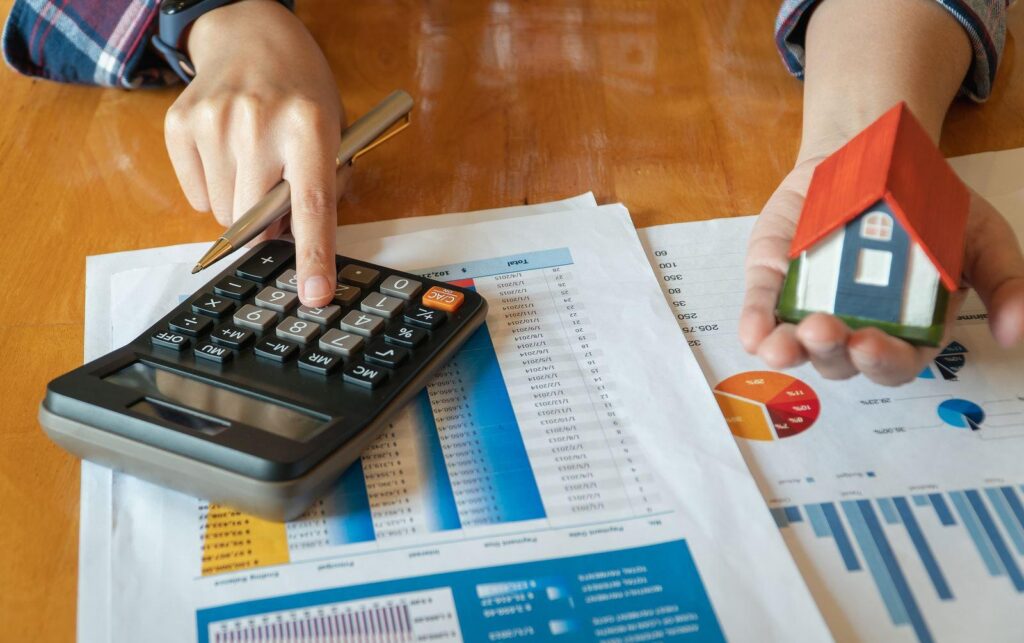
How should they include upfront buying costs in the goal?
They should treat buying costs as a separate target or roll them into one “total cash needed” number.
A deposit alone is rarely the full story. Stamp duty and other costs can be significant depending on location and buyer type. If a calculator ignores these, it can claim they’re “deposit-ready” while they’re still short of what they actually need to settle.
What’s a simple savings calculator they can use right now?
They can use this quick framework to estimate months to target:
Step 1: Set the targets
- Property price: P
- Deposit rate: D%
- Buying costs buffer (optional): C
Deposit target = P × D%
Total target = Deposit target + C
Step 2: Add their starting point
- Current savings: S
- Monthly savings: M
Step 3: Estimate time
- Months ≈ (Total target − S) ÷ M
Example:
- P = $600,000
- D = 20% → deposit = $120,000
- C = $20,000 → total target = $140,000
- S = $20,000
- M = $2,500
Months ≈ (140,000 − 20,000) ÷ 2,500 = 48 months.
What are the most common mistakes that make timelines unrealistic?
The biggest mistake is assuming they can save the same amount every month without interruptions. Real life includes holidays, car repairs, medical bills, and family costs.
Another common error is forgetting buying costs or assuming the property price won’t change. If prices rise during their saving period, the goalpost moves. A good calculator should be rerun every 3 to 6 months.
How can they shorten the time to reach a deposit without “earning more”?
They can shorten the timeline by increasing the gap between income and expenses, even temporarily. Small changes stack up when they’re consistent.
Examples include reducing housing costs, attacking high-interest debt, pausing major discretionary spending, or directing bonuses straight to savings. If they can raise monthly savings by $500, that can cut the timeline by many months, especially on mid-sized targets.
When should they stop saving and start speaking to a broker or lender?
They should talk to a broker early if they want clarity on deposit size, LMI options, and serviceability. It’s not only about saving, it’s also about borrowing capacity and policy.
If they’re within 6 to 12 months of their target, a conversation can prevent wasted effort. It also helps them estimate a realistic purchase price range, which makes the savings target more accurate.
What’s the takeaway they should use to plan their deposit timeline?
They should treat the deposit like a project with numbers, dates, and regular check-ins. A calculator turns the goal into a plan, but they need to keep updating it as income, expenses, and property prices change.
If they want the simplest next step: they should choose a property price range, set a deposit percentage, add a buying-cost buffer, and calculate months using their true monthly savings. Then they should aim to improve that monthly number first.
FAQs (Frequently Asked Questions)
What does an investment property deposit usually mean?
An investment property deposit is the upfront cash contribution towards buying an investment property, typically expressed as a percentage of the purchase price. Many lenders prefer a 20% deposit to avoid Lenders Mortgage Insurance (LMI), but smaller deposits are possible if qualified. Buyers also need to budget for additional costs like stamp duty, inspections, and loan fees.
How can a savings calculator help plan for an investment property deposit?
A savings calculator estimates how many months it may take to reach a deposit by using inputs such as income, expenses, existing savings, and expected returns. It turns vague goals into a realistic timeline by factoring in monthly savings, current savings, interest rates, and potential increases in saving amounts over time.
What inputs should I provide to get accurate results from a savings calculator?
At minimum, you should input your target deposit amount and how much you can save each month. For more realistic forecasts, include current savings, expected savings interest rate, any planned increases in monthly savings, and consider irregular costs or lifestyle spending to avoid overly optimistic timelines.
How do I calculate my deposit target based on the property price?
You can estimate your deposit target by multiplying the property’s purchase price by your intended deposit percentage. For example, for a $600,000 property with a 20% deposit rate, your target is $120,000. Decide whether this includes just the deposit or also upfront buying costs like stamp duty and fees.
How long will it take to save my deposit if I save a fixed amount monthly?
Ignoring interest, the timeline is calculated as: months = (target − current savings) ÷ monthly savings. For example, if your target is $120,000, you have $20,000 saved already, and save $2,500 per month, it will take about 40 months (a bit over 3 years). This conservative baseline helps set realistic expectations.
What common mistakes should I avoid when planning my deposit timeline?
Common errors include assuming you can save the same amount every month without interruptions like holidays or unexpected expenses. Forgetting to include buying costs beyond the deposit or ignoring potential property price increases during saving periods also makes timelines unrealistic. Regularly updating your plan every 3 to 6 months helps keep goals achievable.
Click here for more 5 Reasons to Use an Investment Property Buyers Agent in Competitive Markets