
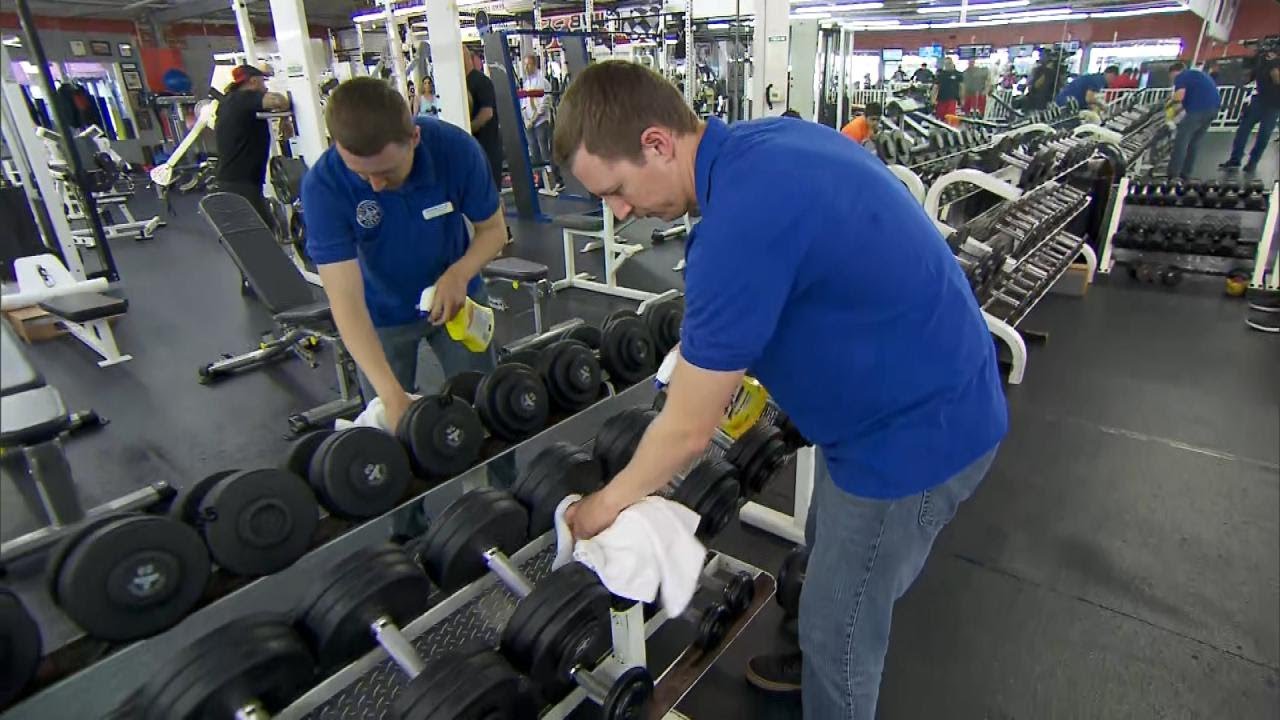
Not every single item in a gym carries the same risk, though. Professional cleaners usually focus on the equipment that gets touched constantly, gets sweated on, and stays in circulation all day without a break. The stuff members assume is clean. The stuff they put their face near. The stuff they share without thinking.
Below is the equipment that typically requires daily sanitisation from professional cleaners, and honestly, it is more than most people expect.
What equipment gets touched the most and therefore needs daily sanitisation?
If there is one principle every fitness facility should remember, it is that hands transfer germs and contaminants from one surface to another. Since gyms involve constant contact with equipment, weights, mats, and machines, professional gym cleaners play an important role in maintaining a hygienic training environment for members and staff.
Daily professional sanitisation should cover:
- Entry and check in touchpoints: turnstiles, door handles, front desk counters, pens, clipboards, card readers, touch screens.
- Lockers and changing area touchpoints: locker handles, bench seating, hairdryer buttons, light switches, taps, toilet flush plates, cubicle locks.
- Drinking fountain buttons and bottle fill stations: these are small surfaces but used constantly.
Some gyms think of this as general cleaning, not equipment cleaning, but it matters because it is the first and last thing members touch.
Which cardio machines require daily sanitisation from professional cleaners?
Cardio equipment is a daily sanitisation priority because people stay on it for longer. They sweat more. They hold the same points for 10, 20, 40 minutes.
Professional cleaners typically sanitise:
- Treadmills: handrails, speed and incline buttons, emergency stop clips, console edges, side rails.
- Ellipticals and cross trainers: moving handles, fixed grips, consoles, resistance buttons.
- Exercise bikes and spin bikes: handlebars, resistance knobs, screens, seat adjustment levers.
- Rowers: handles, monitor buttons, foot straps, adjustment points.
- Stair climbers and steppers: rails, grips, console controls.
And it is not just a quick wipe. Daily sanitisation should include the areas where grime builds up, like textured grips and the edges around buttons where sweat dries and sits.
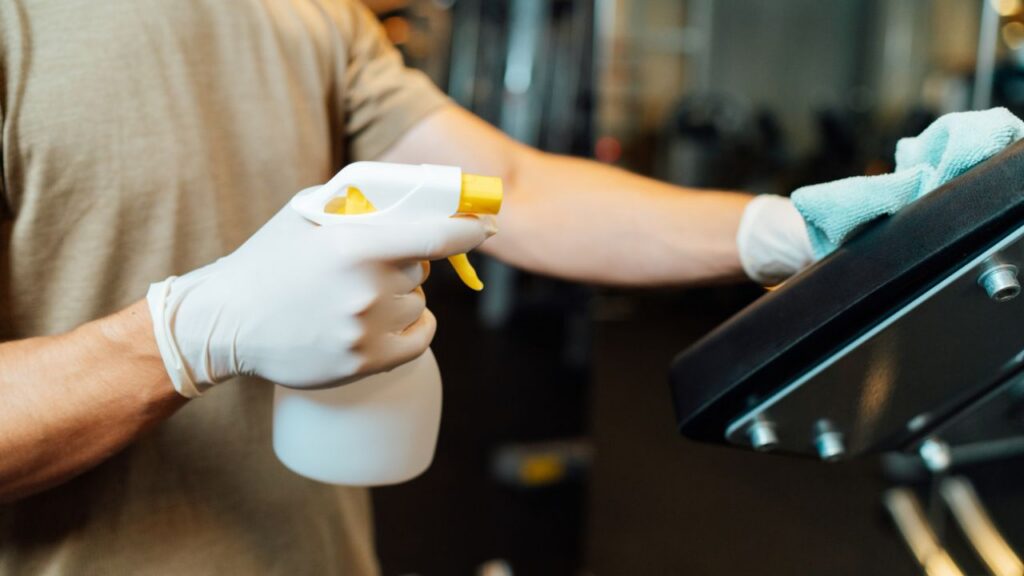
What strength machines and weight equipment should be sanitised daily?
Strength equipment gets hit in shorter bursts, but by more people. A cable machine handle might get swapped between ten sets in ten minutes. Plus, chalk, skin oils, and sweat collect fast.
Daily sanitisation should include:
- Selectorised machines: adjustment levers, seat backs, pads, pin handles, touchpoints on frames.
- Cable stations: all common handles, rope attachments, straight bars, V handles, ankle cuffs.
- Smith machines and racks: bar contact points, hooks, adjustment knobs, safety catches.
- Benches: flat, incline, decline benches, including the vinyl surfaces and adjustment handles.
- Free weights: dumbbell grips, kettlebell handles, fixed barbells, EZ curl bars.
This is where professional cleaners usually make a difference. They are more consistent about getting the unglamorous stuff. The adjustment levers. The pop pins. The little handles nobody thinks about but everybody touches.
Which mats and floor based equipment need daily sanitisation?
Mats are deceptively gross. People lie on them. Stretch on them. Sometimes they put their face near them. And a lot of gyms have members who do not wipe them down properly, even if wipes are right there.
Daily sanitisation should cover:
- Yoga mats and general studio mats: especially shared mats provided by the gym.
- Ab mats and sit up pads
- Stretching mats and foam floor areas
- Balance pads and step platforms
- Medicine balls and slam balls: they hit the floor, then get grabbed again. Over and over.
Also worth saying, if they have artificial turf lanes for sleds or functional training, those surfaces need daily attention too. Turf holds onto sweat and dirt, and it gets used for more than just sled pushes. People crawl on it. Sit on it. Drop gear on it.
What small accessories and shared tools should professional cleaners sanitise every day?
These are the items that bounce between people all day long. They are easy to miss because they are not bolted to the floor, and they end up in piles, corners, random racks.
Daily sanitisation should include:
- Resistance bands and mini bands
- TRX handles and suspension trainers
- Foam rollers and massage balls
- Jump ropes (handles especially)
- Weightlifting belts if they are shared
- Collars and clips for barbells
- Core wheels and push up handles
If the gym lends it out, shares it, or leaves it in open racks for anybody to grab, it belongs on the daily sanitisation list.
What high risk areas around equipment also require daily professional sanitisation?
Some of the most important surfaces are not technically equipment. They are transitional touchpoints used immediately before or after equipment use, which places them directly in the contamination pathway. You can learn more about contamination chain control in shared environments to understand how these surfaces impact infection transmission risk.
Daily professional sanitisation should include:
- Water stations and vending machine buttons
- Clean towel bins and used towel bins lids
- Spray bottles and wipe dispensers (yes, even these)
- Handrails in stairwells and corridors
- Touchpoints in group exercise studios: door handles, light switches, sound system controls, shared microphones.
This is where a gym can look clean and still not be clean. It smells fine, floors look fine, but the touchpoints have not been properly sanitised.
How do professional cleaners handle sanitisation without damaging gym equipment?
This is a practical issue. Gym owners worry about electronics, screens, rubber coatings, vinyl cracking. And they should. Overly harsh chemicals, or the wrong application method, can ruin equipment fast.
Professional cleaners usually avoid damage by:
- Using manufacturer safe disinfectants suitable for vinyl, rubber, and powder coated metal.
- Applying product to cloths rather than spraying directly onto consoles and screens.
- Following contact times so sanitiser actually works instead of being wiped off instantly.
- Rotating cloths and changing frequently to avoid smearing germs from one machine to the next.
The point is not soaking everything. It is controlled, consistent sanitisation done with the right products.
What does a realistic daily sanitisation checklist look like for a gym?
A workable daily plan is not about cleaning everything the same way. It is about hitting the highest use, highest risk items every single day, without gaps.
Most daily professional cleaner checklists include:
- Cardio touchpoints across all machines.
- Strength machine pads, handles, and adjustment points.
- Benches and free weight grips.
- Shared mats and functional training accessories.
- High touch surfaces across reception, changing rooms, and studios.
- Spot checks and re sanitising during peak times if arranged.
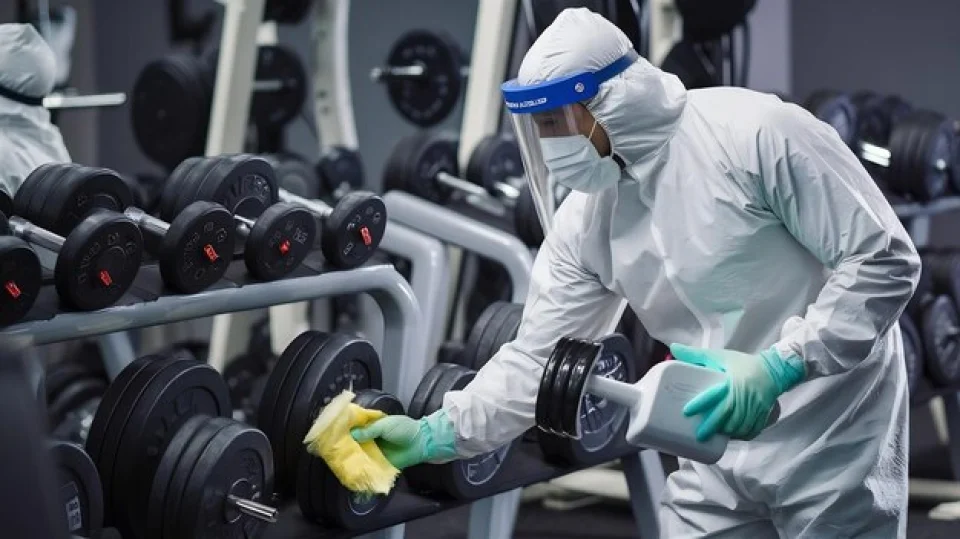
And yes, members should still wipe down after use. But gyms cannot rely on that. Daily professional sanitisation is the backstop. The thing that keeps standards consistent, even on busy days when nobody is thinking about the wipes.
At the end of it, the equipment that needs daily sanitisation is simple to identify. If lots of people touch it, sweat on it, or put their body close to it, it should be professionally sanitised every day. That is the baseline. Anything less is basically hoping for the best—aligned with gym cleaning Sydney hygiene standards for consistent risk management and facility upkeep.
FAQs (Frequently Asked Questions)
Why is daily professional sanitisation crucial in gyms?
Gyms are high-risk environments due to warm bodies, shared surfaces, sweat, and fast turnover of users. Daily professional sanitisation ensures that equipment and touchpoints that are frequently used and come into contact with sweat and skin oils are properly cleaned to prevent the spread of germs and maintain a safe workout environment.
Which gym equipment requires daily sanitisation by professional cleaners?
Professional cleaners focus on equipment that gets touched constantly, sweated on, and remains in circulation all day without breaks. This includes cardio machines like treadmills, ellipticals, exercise bikes; strength machines such as selectorised machines, cable stations, Smith machines; mats and floor-based equipment like yoga mats and medicine balls; small accessories like resistance bands and TRX handles; plus high-risk touchpoints such as door handles, water stations, towel bins, and wipe dispensers.
What are the key touchpoints on cardio machines that need daily cleaning?
Daily sanitisation should cover handrails, speed and incline buttons, emergency stop clips, console edges, side rails on treadmills; moving handles, fixed grips, consoles, resistance buttons on ellipticals; handlebars, resistance knobs, screens on exercise bikes; handles, monitor buttons, foot straps on rowers; and rails, grips, console controls on stair climbers and steppers. These areas accumulate sweat and grime and require thorough cleaning.
How should strength training equipment be sanitized daily?
Strength equipment requires cleaning of adjustment levers, seat backs, pads, pin handles on selectorised machines; all common handles and attachments on cable stations; bar contact points, hooks, adjustment knobs on Smith machines and racks; vinyl surfaces and adjustment handles on benches; as well as dumbbell grips, kettlebell handles, fixed barbells. Professional cleaners pay close attention to these often overlooked but frequently touched areas.
Which mats and floor-based gym equipment need regular sanitisation?
Mats such as yoga mats (especially shared ones), ab mats, sit up pads, stretching mats, foam floor areas; balance pads; step platforms; medicine balls and slam balls require daily sanitisation. Additionally, artificial turf lanes used for sleds or functional training also need attention as they hold sweat and dirt from frequent use.
What small accessories in gyms should be included in the daily sanitisation routine?
Small shared tools like resistance bands and mini bands; TRX handles; foam rollers; massage balls; jump rope handles; shared weightlifting belts; collars and clips for barbells; core wheels and push up handles must be sanitized every day since they pass between many users throughout the day.